
Samson: Emasculation Pt. 2
When Manhood is Identity, you'll die before you die

“I'm growin' shorter, Pampers cover my hind quarters
I watch my father walk back in my life and it clears up a hurt
I couldn't explain, mama gives me my name
Then hands me over to the doctor and I watch as my spirit reverts
(Na, na, na) Then I'm no longer here on this Earth”
J.Cole, “The Fall-Off is Inevitable”, The Fall-Off
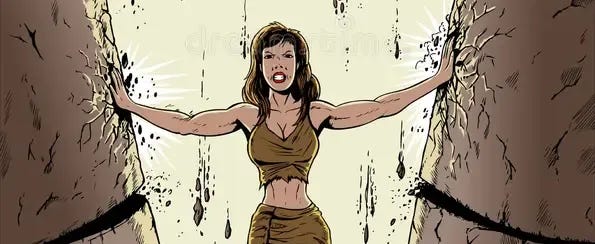
Samson’s death happens before he dies. Yes we know about the tearing down of the Temple of Dagon with the pillars later in the narrative. BUT in an important sense, Samson as a character, as a man, dies well before he actually kills himself. Last week I alluded that our narrator will give us subtle clues suggesting to us as readers that Samson, after being caught by the Philistines in Delilah’s soothing embrace, will not only be defeated and humiliated but will be feminized. The pursuit of hegemonic masculinity, the chase to be ‘THE’ man, has lead Samson down a path to becoming in the eyes of his enemies….a woman. In some sense then, Samson THE man dies even before his body drops.
Our first clue is strange for our contemporary North American gendered norms, in which women typically have longer hair, whereas men are expected to have short hair, for the first sign of Samson’s emasculation is his castration by means of the hair cut. Max Nieuwdorp in his book The Power of Hormones, notes how both head hair and facial hair have been cross culturally associated with power and virility, as we can now see how it correlates with testosterone levels (pg. 230-231). But even beyond this, we know that Samson’s hair is tied to his Nazarite masculinity, thus to lose it is not only to lose his nazarite status but to lose his entire way of being a man since birth. For Samson then, this is not simply cleaning himself up for a nice date, he is losing in a symbolical fashion the primary sign to the world of his masculinity.
But next, in just a single verse we are given glaring lights, symbolically speaking, that Samson is being feminized in every sense imaginable—"So the Philistines seized him and gouged out his eyes. They brought him down to Gaza and bound him with bronze shackles, and he ground at the mill in the prison.” (Judges 16:21) As a mighty warrior, the Philistines, like much of the Ancient Near East, are making Samson a prisoner of war. Understand that Samson at this point has been a terrorist in their eyes, therefore, not only do they need to rid themselves of him but they need to make an example of him in the eyes of other ‘would-be’ enemies. In similar fashion to the American soldiers humiliating prisoners at Abu Gharib, so too is Samson going to be rendered an object of ridicule by making him do women’s work, be sexually submissive, and even deprive him of his ‘family jewels.’
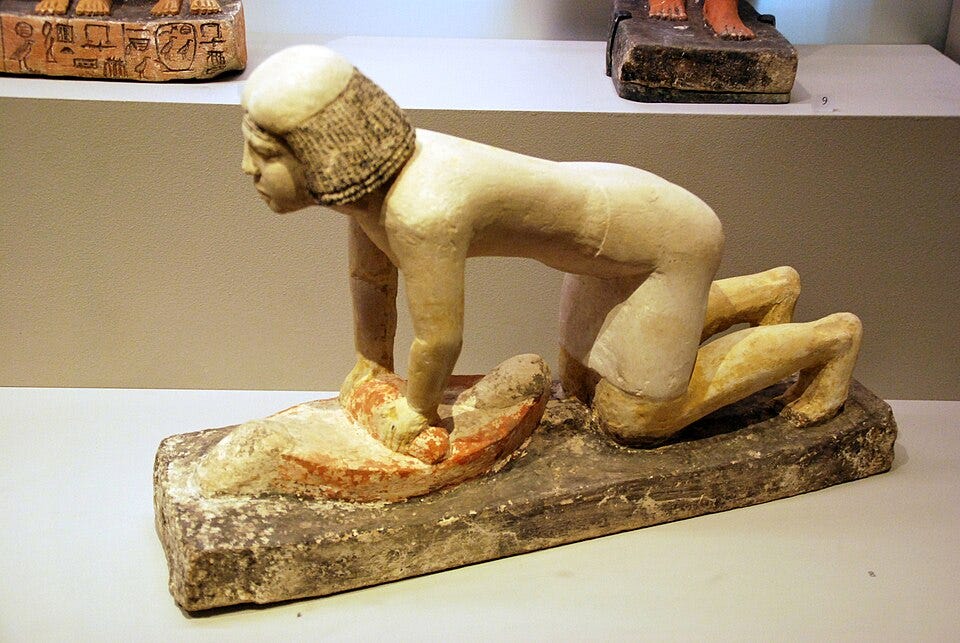
Being made into a ‘grinder’ (טוחן) in prison in the ancient world was largely confined to women’s domesticate labor—to crush grains, fibers, and minerals into even finer material. It required hard work, usually on the floor, looking similar to ab-roller exercises today. No longer the fierce warrior who devastated their entire agriculture infrastructure with his foxes and torches, Samson is now being made to do the women’s labor, even in prison. But, perhaps as you may have already guessed from the image, this work was not simply women’s work. ‘Grinding’ has strong suggestive sexual undertones—note for instance how Job, in praise of his righteousness makes the connection
“If my heart has been enticed by a woman
and I have lain in wait at my neighbor’s door,
then let my wife grind for another,
and let other men kneel over her.” (Job 31:9-10)
Quite literally then thus far we have Samson symbolically castrated by his hair cut, then made to do women’s work, then quite literally be made to be ‘bent over.’ Sadly however, we can now, with this information in mind, see how sly Delilah was in her question to Samson earlier. In Judges 16:6 Delilah asked Samson “Please tell me what makes your strength so great and how you could be bound, so that one could subdue (לענותך) you” which we later see fulfilled when she successfully ‘subdues’ (לענותו) him in her lap (Judges 16:19). But the verb ‘ענת’ both later in Judges (19:24; 20:5) and elsewhere in the Hebrew Bible (eg Gen 34:2, Deut. 21:14 and more) connotes…. rape. To be clear, Samson does not appear to be the victim of sexual violence, but everything in the story thus far indicates that the violence being done to him is layered with sexual overtones precisely because it is an emasculation. But we haven’t even gotten to the weird part yet….
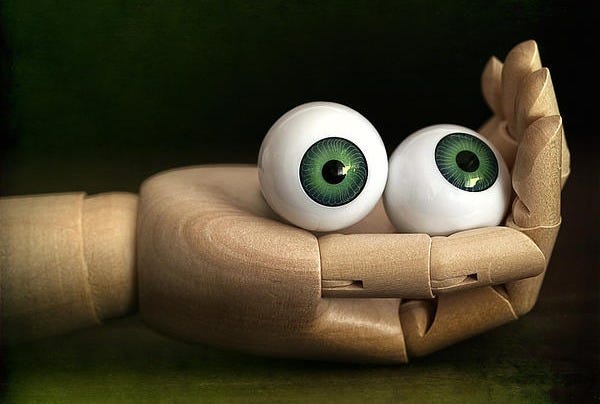
Of all the things that the Philistines could do to Samson, why take out his eyes? Sure, we as the readers know how important Samson’s eyes have been to him ever since he saw the woman at Timnah! Furthermore, perhaps even Christ alludes to this very episode when he counsels that it is better to tear out your eye then go to Hell with it, as it would seem Samson’s eyes lead him right there (Matt. 5:29). But presumably they would want Samson to see others mocking him to only add to his torture, why blind him? It goes back to the grinding, which is not only women’s work but was also associated with the work of slaves and animals, especially at a bigger stone mill. One of the oldest techniques for subduing unruly cattle was literal castration in order to control breeding and make them less aggressive. Literal castration was also widely practiced in the case of slaves in order to prevent them from going after free women and the like.
What has been provocatively suggested by one scholar, to whom I an indebted for much of this reading,1 is that in similar fashion to how other body parts like hands (Isaiah 57:8), thighs (Gen. 24:2-3), and feet (Isaiah 7:20; Ruth 3:4, 7) in the Hebrew Bible are used as euphemisms for male genitals, so too can this pair of eye balls be read as like a pair of testicles. Even until this day, testicles are seen as a primary symbol of masculinity as in the classic line from the movie Scarface: “All I have in this world is my balls and my word, and I don’t break’em for no one.” Castrated by hair and eyes, put into a position of women’s work, made to be literally ‘bent over,’ it could not possibly get worse than this can it? Well as the party begins to go underway “And when their hearts were merry, they said, “Call Samson, and let him entertain us.” So they called Samson out of the prison, and he performed (ויצחק) for them.” (Judges 16:25)
If we did not have enough already to add to the picture, this verb for ‘perform’ (ויצחק) while is can be simply ‘joking’ it can also refer to what a husband does with his wife when he ‘caresses’ her (Gen. 26:8-9), or when a slave tries to sleep with a married woman (Gen. 39:14, 17). What I’m going to suggest here is that what Samson is made to do is probably some form of strip tease dance. Its the capstone to the entire affair, now that they have Samson in this position of women’s work, bent over, and blinded, they will make him entertain them like he made the Gazan sex-worker or Delilah ‘entertain’ him. Samson is being molded into the whore that he visited, it is an entire ritual to strip everything from Samson, to inflict upon him everything he did to them. As he stripped 30 men of clothes, so he will now be stripped down. As he tore the gates away from Gaza, so he’s hair and eyes will be stripped from him. In this way, every act here is a reversal of who Samson was.
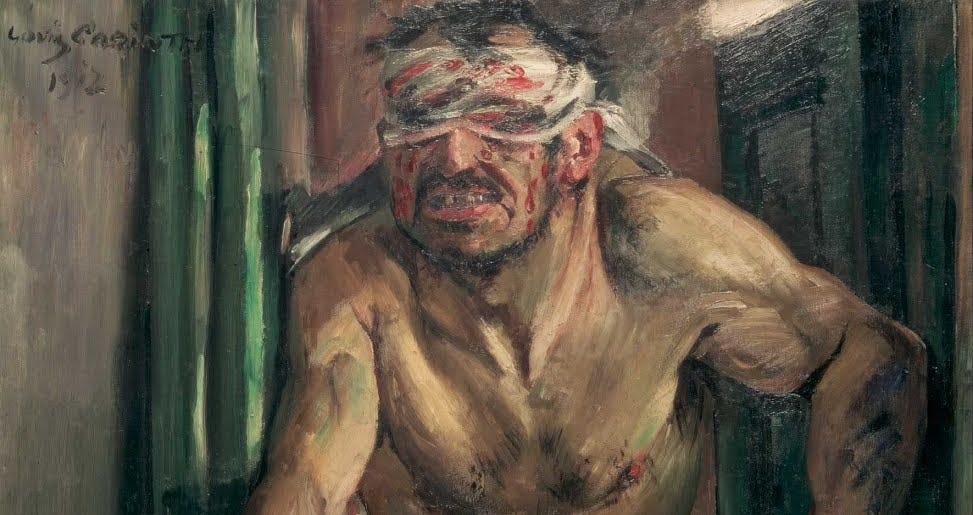
Everything that Samson has ever been, everything he has ever said, everything he has ever done, has culminated in this rich imagery of emasculation that he is undergoing. Nazarite hair and strength, everything he was promised before birth- gone. When he went to the woman at Timnah, he wanted to be with the Philistines, now he is. Visiting prostitutes? Now he’s one. Tearing apart men with jaw bones, now his eyes are gouged out. Everything Samson had done to achieve hegemony, to be ‘THE man,’ has led to a loss of anything in his identity that might be considered ‘masculine’ at all. If you cannot become the man, you’ll die trying.
Lazarewicz-Wyrzykowska, Ela. “Samson: Masculinity Lost (and Regained?).” In Men and Masculinity in the Hebrew Bible and Beyond, edited by Ovidiu Creangă. The Bible in the Modern World 33. Sheffield Phoenix press, 2010.